Curveballs
On Collapse, Care, and Learning to Stay Present When the Story Falls Apart

English version above – Versión en español más abajo.
Curveballs: On Collapse, Care, and Learning to Stay Present When the Story Falls Apart
By Mauro Mueller / El Suizo Dispatches
I. When Things Fall Apart
I’ve always believed that filmmaking trains you for chaos. Sets fall apart. Locations disappear. Actors get sick. Someone has an unexpected ego trip. Money arrives late or not at all. You learn to improvise, adapt, rewrite on the fly.
But this year, life reminded me that no production, no shoot, no late-night edit prepares you for the kind of chaos that happens off set.
It started with an email and then a phone call.
The feature we’d been developing for years collapsed at the last possible moment. Not softly. Spectacularly. The kind of implosion that leaves polite emails in its wake like debris after a controlled demolition. Everyone had a reason, everyone had an excuse, and all of them started with money.
The script was ready. The team was (mostly) ready. The financing seemed in place. The timing, supposedly, was perfect. But timing is a cruel liar in this industry. One producer suddenly diverted, had other plans, chasing other priorities and clearly a lack of experience mixed with a poor understanding of people, of who is steady, who is loyal, and who can actually hold a project when it matters., and just like that, the green light flickered red.
I remember sitting there, staring at my laptop, thinking: so this is how it ends. Not with a fight, but with silence.
And because chaos never travels alone, the next blow came from a different direction.
The sitcom I’d poured my heart into, Our little Embassy (orig. Unsere kleine Botschaft), the first Swiss sitcom in over twenty years, had premiered.
Creatively, it worked. The cast was extraordinary. The collaboration was joyful. People who watched it reached out, wrote messages, asked how the story would continue. Some of them genuinely cherished it.
But television doesn’t run on affection. It runs on numbers.
Enough people didn’t watch. Not fast enough. Not in the quantities the system needs. And in TV, that’s the only metric that really matters. You can have proud collaborators, meaningful reactions, and still disappear quietly once the data comes in.
That’s the heartbreak of television. Not a scandal. Not a failure anyone tweets about. Just a soft fade-out. You watch your show air, then vanish, while louder, simpler things race ahead.
I told myself it was fine. The next thing would work. It always does.
And then my daughter got sick.
II. The Waiting Room
What began like a normal cold turned into something else. Fever. Coughing that wouldn’t stop. A chest X-ray. Viral pneumonia.
Suddenly, the rhythm of my life, meetings, deadlines, rewrites, travel, just stopped.
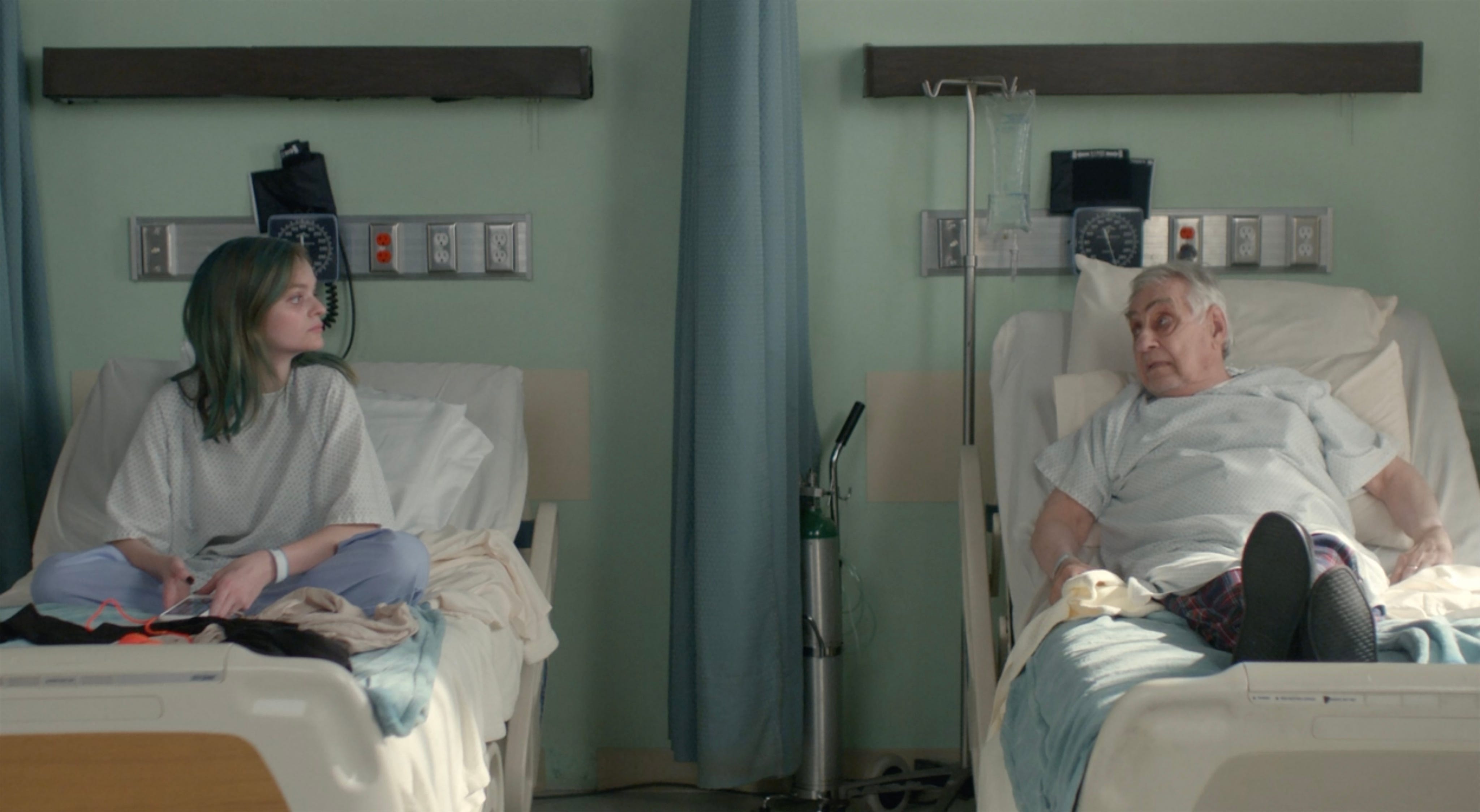
Hospitals have a strange sound design. The hum of machines. The rhythm of breathing. The soft alarms that somehow feel louder than any gunshot I’ve ever mixed in a film. The lighting is permanent twilight. Days and nights blur together. You live in twelve-hour increments, waiting for results, for clarity, for the doctor who doesn’t arrive.
And in that fluorescent fog, something shifted in me.
For years, I’ve built my life around controlling stories, shaping them, fixing them, making them work. But there’s nothing to fix in a hospital room. There’s only presence. Breathing. Touching a small hand. Holding fear quietly so it doesn’t spill over.
I had spent months trying to sell my stories, convincing broadcasters, investors, distributors that my vision was worth their attention. Now I was living a story I’d never have written. One without structure, without control, and without a guaranteed ending.
My entire filmography, shorts, features, series, suddenly felt irrelevant next to that IV drip.
And yet, strangely, that’s where meaning crept back in.
Because when life rips away your illusion of control, it also strips away the noise. You remember why you tell stories in the first place, not to prove anything, but to make sense of what can’t be planned.
III. Fear, Money, and the Myth of the Comeback
I’ve lost projects before. Anyone who works in film has. You develop for years, sometimes decades, and one phone call unravels it all. But this one hurt differently.
It felt like everything was finally aligning. After years of moving between countries and systems, the “big one” seemed within reach. I’d done all the things the industry asks of you. Packaged. Budgeted. Networked. Co-produced. Filled out forms in triplicate across continents.
The film was international in spirit and structure, exactly the kind of hybrid I’ve built my identity around. It had an A-list actor attached, strong department heads, an exceptional IP, and a powerful script. On paper, it made sense. In reality, it was fragile in the way all ambitious things are.
And then, poof.
Some people only see numbers. They don’t see tone, or trust, or the invisible chemistry that turns uncertainty into meaning. They see spreadsheets. Risk curves. Exit scenarios. And the moment the math stops feeling comforting, the courage evaporates.
There’s also a quieter truth we don’t talk about enough: many producers and executives struggle to recognize real talent. A recent success doesn’t necessarily reflect strong direction or deep storytelling, just as a setback doesn’t erase years of craft. This industry loves clean narratives, the hot name, the latest win, the illusion of certainty. But talent is rarely linear, and vision doesn’t always announce itself with numbers attached.
This business rewards certainty over depth. But depth takes time, and talent often appears long before the numbers do.
There are many gifted filmmakers working without momentum, without headlines, without the protection of recent success. And there are projects that deserve patience, trust, and care long before they ever make sense on paper.
Filmmaking likes to present itself as a business driven by vision and boldness. But the engine underneath it all is fear. Fear of losing money. Fear of losing status. Fear of being the person who said yes when everyone else said no.
Many people in power don’t actually love cinema. They love safety. And safety rarely survives contact with anything interesting.
The older I get, the less angry I am about this. It isn’t personal. Everyone is protecting something: a job, a reputation, a fragile sense of authority. Everyone is afraid of being wrong in public.
Still, there’s that familiar moment when you realize they never really saw you. They didn’t see the years behind the script, the relationships holding the project together, or why this particular story needed to exist now. They saw a product. A pitch deck. A projection.
And when that collapses, the industry expects you to perform the comeback. To bounce back quickly. To turn resilience into branding. To answer the question “What’s next?” with confidence and momentum.
But most comebacks don’t look like triumph. They look like silence. Like sitting with the wreckage and resisting the urge to grab the next shiny thing just to prove you’re still standing.
Maybe the real work isn’t the comeback at all. Maybe it’s staying honest in the pause. Keeping your compass intact when the validation disappears. Remembering why you started telling stories before money became the loudest voice in the room.
Not to be liked.
Not to be safe.
But to tell the truth.
IV. A New Take
As a Swiss-Mexican filmmaker, I’ve always lived between two instincts. One built on structure. The other on improvisation. Switzerland taught me precision. Mexico taught me survival.
When things fall apart, those instincts collide. The Swiss part of me wants to fix, schedule, control. The Mexican part says, déjalo fluir. Let it flow.
For a long time, I thought one of them had to win. Now I’m not so sure.
I used to measure my career in milestones: festivals, awards, deals. Now I measure it by something quieter. How I show up when things don’t work. Who I listen to when the noise fades. What I protect when nothing is guaranteed.
The feature that collapsed clarified who my real collaborators are.
The show that didn’t hit its numbers taught me more about reach and reality than any success could have.
And the weeks in the hospital stripped everything back to what actually matters: love, health, presence.
Everything else is optional.
When my daughter finally came home, weak but smiling, it felt like being handed a second take. Not a reset. Not a miracle. Just another chance to pay attention. To put the phone away. To listen, truly listen, when she wants to say something. To be present, without distraction.
I sat back down at my desk, the same one where weeks earlier I’d stared at the ruins of a film deal, and started writing again. I don’t think I’ve ever written as much as I have in the last couple of weeks, treatments, short films, feature drafts, rewrites, essays. And for the first time in a while, it doesn’t feel frantic. It feels grounded. A few of these projects might actually want to be made.
There’s a line from Rainer Maria Rilke that I’ve carried with me for years, one that keeps resurfacing whenever things fall apart:
“Let everything happen to you: beauty and terror. Just keep going. No feeling is final.”
It comes from Gott spricht zu jedem nur, eh er ihn macht (“God Speaks to Each Person Before He Makes Them”), a poem Rilke wrote in the early 1900s. The original German is even starker, almost austere in its simplicity:
Lass dir Alles geschehn: Schönheit und Schrecken.
Man muss nur gehn: Kein Gefühl ist das fernste.
What I love about that line is how unsentimental it is. Rilke isn’t offering comfort. He’s not promising resolution or redemption. He’s saying: don’t filter your life. Don’t curate it. Keep moving.
“No feeling is final” doesn’t mean pain disappears. It means it transforms. Fear mutates. Grief loosens its grip. Even joy, if you cling to it too tightly, changes shape. Everything is temporary, including the moments that feel unbearable.
That idea has followed me through filmmaking and life. Projects collapse. Momentum disappears. Illness enters the frame. And your instinct is to control the edit, to rush toward meaning, to force a narrative arc where none exists yet.
Rilke suggests something harder and braver: stay with it. Walk through it. Don’t decide too quickly what it all means.
That, to me, is what curveballs really are. Not punishments. Not detours. Just experiences that insist on being felt, but refuse to be definitive.
If I’d gotten everything I wanted when I wanted it, I might have become efficient, but not interesting. It was the chaos that gave me perspective. The heartbreak that gave me depth. The interruptions that taught me humility.
I imagine the camera pulling back. A filmmaker at his desk. Daylight cutting across unfinished pages. A child laughing faintly in the next room.
And now, as Hanukkah lights begin to burn down and Christmas approaches, the days naturally slow. Candles replace screens. Meals take longer. Stories are told again, sometimes the same ones, sometimes new versions. There is warmth, not just emotional, but physical: hands, food, light, breath.
In German, there’s a word for this: sinnlich. It doesn’t mean indulgent or sensual in a narrow sense. It means being fully alive to sensation, to presence, to time passing. Being in the body. Being in time. Letting work wait. Letting family come first. Letting the year close without forcing an ending.
Outside, the city hums. Inside, a quiet steadiness.
The story isn’t over.
It’s still being written.
—Mauro / El Suizo

———————————————————————————————
Giros inesperados: sobre el derrumbe, el cuidado y aprender a estar presente cuando la historia se desmorona
Por Mauro Mueller / El Suizo
I. Cuando todo se viene abajo
Siempre he creído que el cine te entrena para el caos. Los rodajes se desarman. Las locaciones desaparecen. Los actores se enferman. Alguien tiene, de repente, un ataque de ego. El dinero llega tarde o simplemente no llega. Aprendes a improvisar, a adaptarte, a reescribir sobre la marcha.
Pero este año, la vida me recordó que ningún proyecto, ningún rodaje, ninguna noche de edición hasta la madrugada te prepara para el tipo de caos que ocurre fuera del set.
Todo empezó con un correo electrónico y luego una llamada telefónica. El largometraje que habíamos desarrollado durante años se vino abajo en el último momento posible. No de manera silenciosa, sino de forma espectacular. Un tipo de implosión que deja a su paso correos educados, como escombros después de una demolición controlada. Todos tenían una razón, todos una excusa, y casi todas empezaban con dinero.
El guion estaba listo. El equipo estaba (en su mayoría) listo. El financiamiento parecía asegurado. El momento, supuestamente, era perfecto. Pero el timing es un mentiroso cruel en esta industria. Un productor, de pronto, se desvió: tenía otros planes, perseguía otras prioridades, y mostraba claramente una falta de experiencia mezclada con una pobre comprensión de las personas, de quién es firme, quién es leal y quién puede realmente sostener un proyecto cuando importa. Y así, sin más, la luz verde parpadeó en rojo.
Recuerdo estar sentado ahí, mirando la pantalla de mi laptop, pensando: así es como termina esto. No con una pelea, sino con silencio.
Y como el caos nunca viaja solo, el siguiente golpe llegó desde otro frente. La sitcom en la que había puesto el corazón, Nuestra pequeña Embajada (orig. Unsere kleine Botschaft), la primera sitcom suiza en más de veinte años, se estrenó.
Creativamente, funcionó. El elenco fue extraordinario. La colaboración, una alegría. Personas que la vieron me escribieron, mandaron mensajes, preguntaron cómo continuaría la historia. Algunos la atesoraron de verdad.
Pero la televisión no funciona con afecto. Funciona con números.
No la vio suficiente gente. No lo suficientemente rápido. No en las cantidades que el sistema exige. Y en la TV, ese es el único indicador que realmente importa. Puedes tener colaboradores orgullosos, reacciones profundas, y aun así desaparecer en silencio cuando llegan los datos.
Ese es el desamor de la televisión. No un escándalo. No un fracaso del que alguien tuitee. Solo un fundido suave. Ves tu serie salir al aire y luego desvanecerse, mientras cosas más ruidosas y más simples avanzan a toda velocidad.
Me dije que estaba bien. Que lo siguiente funcionaría. Siempre lo hace.
Y entonces mi hija se enfermó.
II. La sala de espera
Lo que empezó como un resfriado normal se convirtió en otra cosa. Fiebre. Tos que no se detenía. Una radiografía de tórax. Neumonía viral.
De pronto, el ritmo de mi vida, reuniones, plazos, reescrituras, viajes, simplemente se detuvo.
Los hospitales tienen un diseño sonoro extraño. El zumbido de las máquinas. El ritmo de la respiración. Las alarmas suaves que, de algún modo, se sienten más fuertes que cualquier disparo que haya mezclado en una película. La iluminación es un crepúsculo permanente. Los días y las noches se confunden. Vives en bloques de doce horas, esperando resultados, claridad, al médico que no llega.
Y en esa neblina fluorescente, algo dentro de mí cambió.
Durante años he construido mi vida alrededor del control de las historias: darles forma, afinarlas, arreglarlas, hacer que funcionen. Pero en una habitación de hospital no hay nada que arreglar. Solo hay presencia. Respirar. Tocar una mano pequeña. Sostener el miedo en silencio para que no se desborde.
Había pasado meses intentando vender mis historias, convenciendo a canales, inversionistas y distribuidores de que mi visión merecía su atención. Y ahora estaba viviendo una historia que jamás habría escrito. Una sin estructura, sin control y sin un final garantizado.
Toda mi filmografía, cortos, largometrajes, series, de pronto se sintió irrelevante frente a ese suero intravenoso.
Y, sin embargo, de forma extraña, fue ahí donde el sentido volvió a filtrarse.
Porque cuando la vida te arranca la ilusión de control, también te quita el ruido. Recuerdas por qué cuentas historias en primer lugar: no para demostrar nada, sino para intentar comprender aquello que no se puede planear.
III. Miedo, dinero y el mito del regreso
He perdido proyectos antes. Cualquiera que trabaje en cine los pierde. Desarrollas durante años, a veces décadas, y una sola llamada telefónica lo deshace todo. Pero este dolió distinto.
Sentía que por fin todo se estaba alineando. Después de años moviéndome entre países y sistemas, “el grande” parecía al alcance. Había hecho todo lo que la industria te pide. Empaquetar. Presupuestar. Hacer networking. Coproducir. Llenar formularios por triplicado en distintos continentes.
La película era internacional en espíritu y estructura, exactamente el tipo de híbrido sobre el que he construido mi identidad. Tenía un actor de primera línea vinculado, jefes de departamento sólidos, una IP excepcional y un guion poderoso. En papel, tenía todo el sentido del mundo. En la realidad, era frágil, como lo son todas las cosas ambiciosas.
Y de pronto, puff.
Hay personas que solo ven números. No ven el tono, ni la confianza, ni esa química invisible que transforma la incertidumbre en sentido. Ven hojas de cálculo. Curvas de riesgo. Escenarios de salida. Y en el momento en que las matemáticas dejan de resultarles tranquilizadoras, el coraje se evapora.
Existe también una verdad más silenciosa de la que hablamos poco: muchos productores y ejecutivos tienen dificultades para reconocer el talento real. Un éxito reciente no necesariamente refleja una dirección sólida o una narración profunda, así como un tropiezo no borra años de oficio. Esta industria ama las narrativas limpias: el nombre caliente, la última victoria, la ilusión de certeza. Pero el talento rara vez es lineal, y la visión no siempre se anuncia con números adjuntos.
Este negocio recompensa la certeza por encima de la profundidad. Pero la profundidad toma tiempo, y el talento suele aparecer mucho antes de que lleguen los números.
Hay muchos cineastas dotados trabajando sin impulso, sin titulares, sin la protección de un éxito reciente. Y hay proyectos que merecen paciencia, confianza y cuidado mucho antes de que tengan sentido sobre el papel.
Al cine le gusta presentarse como un negocio impulsado por la visión y la audacia. Pero el motor que hay debajo de todo es el miedo. Miedo a perder dinero. Miedo a perder estatus. Miedo a ser la persona que dijo que sí cuando todos los demás dijeron que no.
Muchas personas en el poder no aman realmente el cine. Aman la seguridad. Y la seguridad rara vez sobrevive al contacto con algo interesante.
Cuanto mayor me hago, menos rabia me produce esto. No es algo personal. Todos están protegiendo algo: un trabajo, una reputación, una frágil sensación de autoridad. Todos tienen miedo de equivocarse en público.
Aun así, existe ese momento familiar en el que te das cuenta de que nunca te vieron de verdad. No vieron los años detrás del guion, las relaciones que sostenían el proyecto, ni por qué esta historia en particular necesitaba existir ahora. Vieron un producto. Un pitch deck. Una proyección.
Y cuando eso se derrumba, la industria espera que interpretes el regreso. Que rebotes rápido. Que conviertas la resiliencia en una marca. Que respondas a la pregunta “¿qué sigue?” con seguridad y empuje.
Pero la mayoría de los regresos no se parecen a un triunfo. Se parecen al silencio. A sentarse frente a los restos y resistir el impulso de agarrar lo siguiente que brilla solo para demostrar que sigues en pie.
Tal vez el verdadero trabajo no sea el regreso en absoluto. Tal vez sea mantenerse honesto en la pausa. Conservar la brújula cuando desaparece la validación. Recordar por qué empezaste a contar historias antes de que el dinero se convirtiera en la voz más fuerte de la habitación.
No para caer bien.
No para estar a salvo.
Sino para decir la verdad.
IV. Una nueva toma
Como cineasta suizo-mexicano, siempre he vivido entre dos impulsos. Uno construido sobre la estructura. El otro sobre la improvisación. Suiza me enseñó la precisión. México me enseñó a sobrevivir.
Cuando las cosas se desmoronan, esos impulsos chocan. La parte suiza de mí quiere arreglar, calendarizar, controlar. La parte mexicana dice: déjalo fluir.
Durante mucho tiempo pensé que uno de esos impulsos tenía que ganar. Ahora ya no estoy tan seguro.
Antes medía mi carrera en hitos: festivales, premios, acuerdos. Hoy la mido en algo más silencioso. En cómo me presento cuando las cosas no funcionan. A quién escucho cuando el ruido se apaga. Qué protejo cuando nada está garantizado.
El largometraje que se cayó dejó claro quiénes son mis verdaderos colaboradores.
La serie que no alcanzó sus números me enseñó más sobre alcance y realidad que cualquier éxito podría haberlo hecho.
Y las semanas en el hospital redujeron todo a lo que de verdad importa: amor, salud, presencia.
Todo lo demás es opcional.
Cuando mi hija por fin volvió a casa, débil pero sonriendo, se sintió como recibir una segunda toma. No un reinicio. No un milagro. Solo otra oportunidad de prestar atención. De guardar el teléfono. De escuchar, de verdad escuchar, cuando quiere decir algo. De estar presente, sin distracciones.
Volví a sentarme en mi escritorio, el mismo donde semanas antes había mirado los restos de un acuerdo cinematográfico, y empecé a escribir otra vez. No creo haber escrito tanto como en estas últimas semanas: tratamientos, cortos, borradores de largometrajes, reescrituras, ensayos. Y por primera vez en mucho tiempo, no se siente frenético. Se siente enraizado. Algunos de estos proyectos, quizá, realmente quieren ser hechos.
Hay un verso de Rainer Maria Rilke que llevo conmigo desde hace años, uno que vuelve una y otra vez cada vez que todo se desmorona:
“Deja que todo te suceda: belleza y terror.
Sigue adelante. Ningún sentimiento es definitivo.”
Proviene de Gott spricht zu jedem nur, eh er ihn macht (“Dios habla con cada persona antes de hacerla”), un poema que Rilke escribió a principios del siglo XX. El alemán original es aún más desnudo, casi austero en su sencillez:
Lass dir Alles geschehn: Schönheit und Schrecken.
Man muss nur gehn: Kein Gefühl ist das fernste.
Lo que me gusta de ese verso es lo poco sentimental que es. Rilke no ofrece consuelo. No promete resolución ni redención. Dice otra cosa: no filtres tu vida. No la curadurices. Sigue avanzando.
“Ningún sentimiento es definitivo” no significa que el dolor desaparezca. Significa que se transforma. El miedo muta. El duelo afloja su agarre. Incluso la alegría, si te aferras a ella con demasiada fuerza, cambia de forma. Todo es temporal, incluso los momentos que parecen insoportables.
Esa idea me ha acompañado tanto en el cine como en la vida. Los proyectos se caen. El impulso desaparece. La enfermedad entra en el encuadre. Y el instinto es controlar el montaje, correr hacia el significado, forzar un arco narrativo donde todavía no existe.
Rilke propone algo más difícil y más valiente: quedarse ahí. Atravesarlo. No decidir demasiado rápido qué significa todo esto.
Para mí, eso es lo que realmente son los curveballs, los giros inesperados. No castigos. No desvíos. Solo experiencias que exigen ser sentidas, pero se niegan a ser definitivas.
Si hubiera conseguido todo lo que quería, cuando lo quería, quizá me habría vuelto eficiente, pero no interesante. Fue el caos el que me dio perspectiva. El desamor, profundidad. Las interrupciones, humildad.
Imagino la cámara alejándose. Un cineasta en su escritorio. La luz del día cruzando páginas inacabadas. La risa de una niña, apenas audible, en la habitación de al lado.
Y ahora, mientras las luces de Janucá comienzan a apagarse y se acerca la Navidad, los días se ralentizan de forma natural. Las velas reemplazan a las pantallas. Las comidas se alargan. Las historias se vuelven a contar, a veces las mismas, a veces nuevas versiones. Hay calidez, no solo emocional, sino física: manos, comida, luz, respiración.
En alemán existe una palabra para esto: sinnlich. No significa indulgente ni sensual en un sentido estrecho. Significa estar plenamente vivo a la sensación, a la presencia, al paso del tiempo. Estar en el cuerpo. Estar en el tiempo. Dejar que el trabajo espere. Dejar que la familia vaya primero. Dejar que el año se cierre sin forzar un final.
Afuera, la ciudad zumba. Adentro, una quietud firme.
La historia no ha terminado.
Todavía se está escribiendo.
— Mauro / El Suizo

I really appreciated this piece Mauro. I'm so sorry to hear about the collapse of your film and the poor numbers for the TV sitcom (which just the title alone makes me want to watch fwiw!) But I'm so happy to hear your daughter is home and on the mend and that you are embracing this time to write and lean into your creative intuition. And I *love* that I've learnt a new word - from your definition I think I've been in a state of sinnlichkeit for the past 3 or 4 years..!